On the 16th November 1955, the BTC placed an order for 5 prototype locomotives with North British Ltd. The British Rail Class 22 or "Baby Warship" was a smaller version of the D600 Warship. Like most North British products, they were poor and were all withdrawn between 1967 and 1972, partly because of prejudices against hydraulic transmission and partly because of their service record. Before the first prototype was even built, the BTC had ordered a further 52 locomotives were ordered.
Introduced in 1959 the British Rail Class 28, originally Metropolitan-Vickers Type 2, diesel locomotives, or Metrovicks as they were known, were built as part of the British Railways Modernisation plan.
They were built with low-speed Crossley 8-cylinder two stroke engines as an experiment in two stroke versus four stroke engines for diesel-electric traction. Almost immediately the Metrovick's Crossley engines suffered chronic problems and all 20 locos D5700 - D5719 were sent back to the manufacturer for the engine failures and resolve the problem of the cab windows falling out while running. The engines were also extremely noisy and prone to high levels of exhaust fumes.
Another experiment was the unusual wheel arrangement consisting of a 6-wheel bogie at one end and a 4-wheel bogie at the other. This affected their route availability and complicated their maintenance.
Initially they were allocated to the Midland Division of BR where they were often used in pairs on the overnight London to Glasgow "Condor" express freight service. Later, they were transferred to the Barrow-in-Furness area prior to withdrawal after only 10 years service. With continuing engine problems BR briefly considered replacing the engine but instead, the entire class was scrapped in 1968.
A single locomotive, D5705, survives by accident after being a technical services engine and then train heating unit. It was preserved in 1980 and is currently located on the East Lancs Railway.
Date of order 16th November 1955, maker's order no. L76.
Livery
All locos originally appeared in standard green D600 was painted in standard blue with full yellow ends, D602 was painted in standard blue with yellow end panels. The remaining locos were still in original green with yellow end panels.
Modifications
During their lifetime all the locomotives were fitted with split headcode roller blinds.
Built in 1955, the 001 Class locomotives were the workhorses of the Irish railway network for forty years, on passenger and freight until the mid-1990s.
As with the BR Class 28 they suffered badly from the unreliability of their Crossley engines. The solution was the progressive conversion of the entire fleet with General Motors engines starting in 1968.
These locomotives were originally numbered A1 - A60 and as they were re-engined, they had the suffix 'r' added to their number. From 1972 the prefix letters were dropped and the locomotives were renumbered 001 to 060.
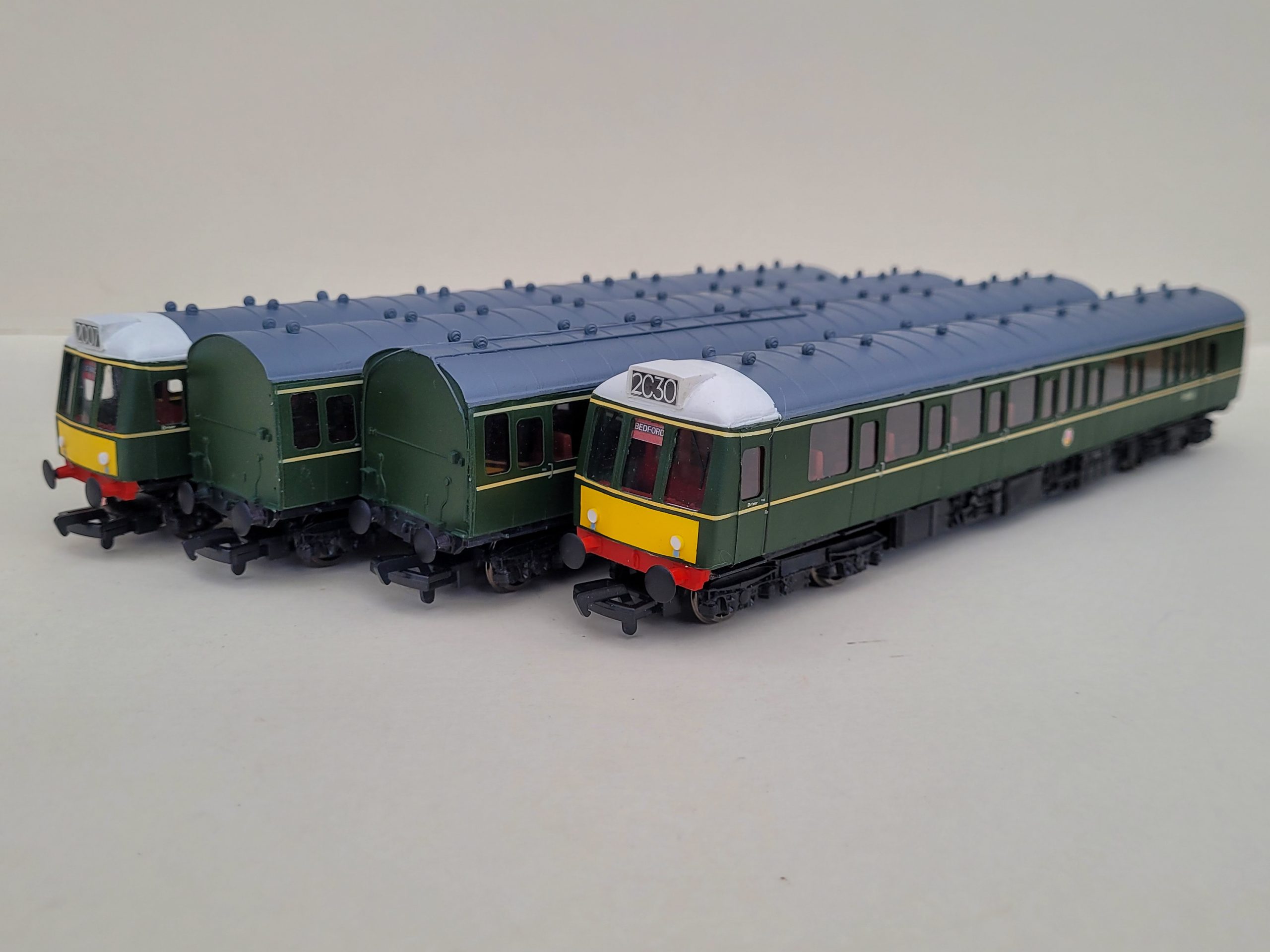
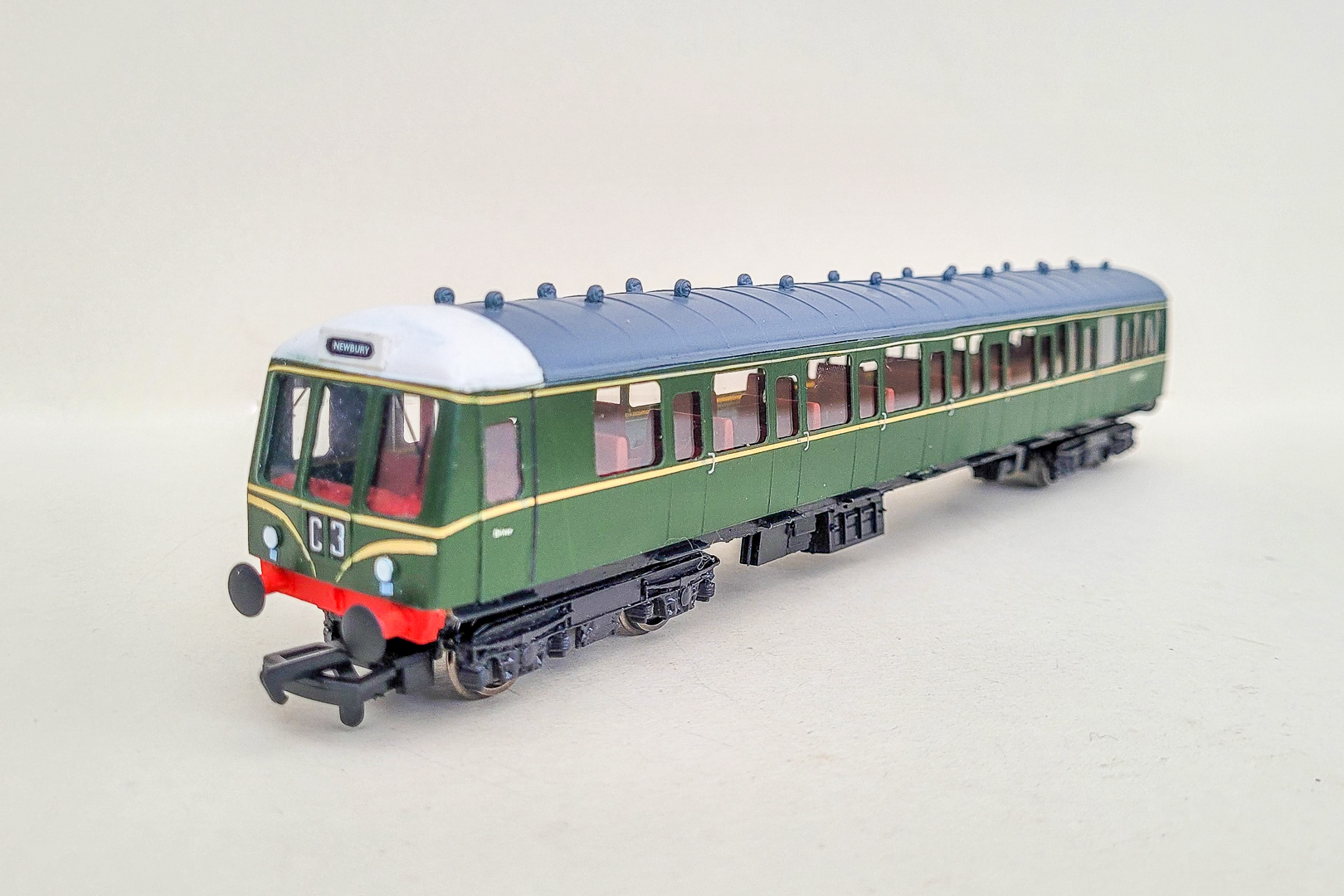
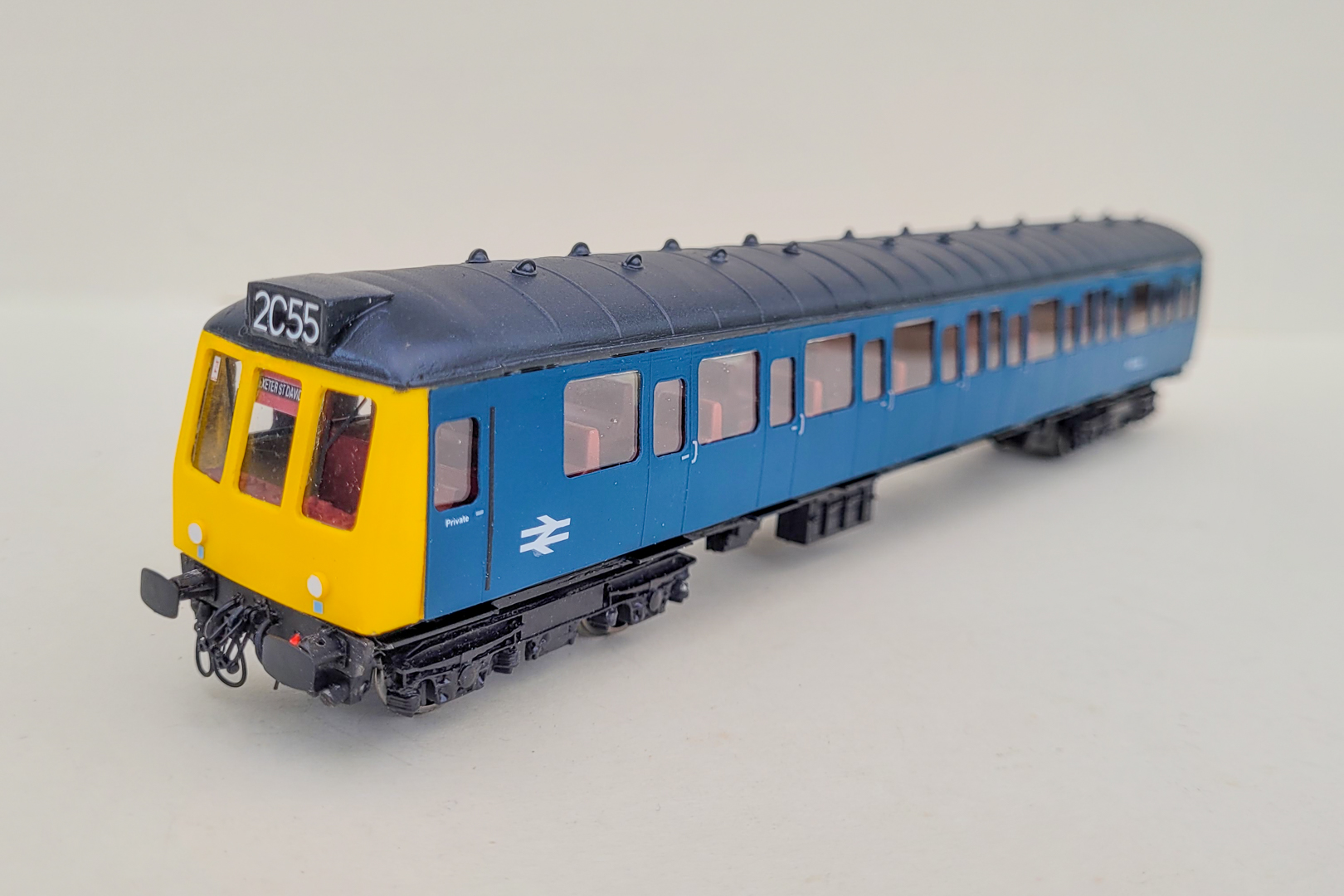
Our kits comprise highly detailed, precision cast, single piece resin body shells, for fitting to proprietary chassis units. Ancillary items including glazing, buffers and underframe components are included where necessary. Comprehensive instructions are included.
Kits are also available fully finished for fitting to customer's own chassis (main line locos only); or complete, ready-to-run. These options are built to order and can be supplied with specified running numbers or detail livery variations to customer choice at no additional cost. Buffer beam detail is available for an extra £5 per end. Postage and packing is £2 for kits, £4 for ready to run models.
Contact Us
To place an order or to enquire please note our new contact details
Phone John Hazleton on +44(0)161 285 5210
email : johnsilverfoxmodels@msn.com
or write to Silver Fox Models, 1 Marsland Terrace, Stockport, SK1 4PZ.
Payment by Credit/Debit Card and cheque accepted.